City Mayors reports news from and for towns and cities in Latin America

FRONT PAGE
SiteSearch
About us
Directories

City Mayors reports news from towns and cities around the world. Worldwide | Elections | North America | Latin America | Europe | Asia | Africa | Events |

Mayors from The Americas, Europe. Asia, Australia and Africa are competing for the annual World Mayor Award. More

City Mayors ranks the world’s largest as well as richest cities and urban areas. It also ranks the cities in individual countries, and provides a list of the capital cities of some 200 sovereign countries. More

City Mayors lists and features urban events, conferences and conventions aimed at urban decision makers and those with an interst in cities worldwide. More

City Mayors reports political events, analyses the issues and depicts the main players. More

City Mayors describes and explains the structures and workings of local government in Europe, The Americas, Asia, Australia and Africa. More

City Mayors profiles city leaders from around the world and questions them about their achievements, policies and aims. More

City Mayors deals with economic and investment issues affecting towns and cities. More

City Mayors reports on how business developments impact on cities and examines cooperation between cities and the private sector. More

City Mayors describes and explains financial issues affecting local government. More

City Mayors reports urban environmental developments and examines the challenges faced by cities worldwide. More

City Mayors reports on and discusses urban development issues in developed and developing countries. More

City Mayors reports on developments in urban society and behaviour and reviews relevant research. More

City Mayors deals with urban transport issues in developed and developing countries and features the world’s greatest metro systems. More

City Mayors examines education issues and policies affecting children and adults in urban areas. More

City Mayors investigates health issues affecting urban areas with an emphasis on health in cities in developing countries. More

City Mayors examines the contributions history and culture make to urban society and environment. More

City Mayors describes the history, architecture and politics of the greatest city halls in the world. More

City Mayors invites readers to write short stories about people in cities around the world. More

City Mayors questions those who govern the world’s cities and talks to men and women who contribute to urban society and environment. More

City Mayors profiles national and international organisations representing cities as well as those dealing with urban issues. More

City Mayors reports on major national and international sporting events and their impact on cities. More

City Mayors lists cities and city organisations, profiles individual mayors and provides information on hundreds of urban events. More
|
|
News from cities in Latin America
NEWS SECTIONS: World news | Election news | News from Europe | News from North America | News from Latin America | News from Asia and Australia | News from Africa | Urban events | NEWS SPECIALS: Local elections in England & Wales 2008 | London elections 2008 | Latest news story | London and Glasgow terrorist attacks 2007 |
US demands enquiry into
Nicaragua local elections
Managua, 19 December 2008: The US has warned Nicaragua that it would lose millions in aid unless it clears up concerns over its 9 November local elections. A 175-million aid programme, run by the Millennium challenge Corporation, was suspended after Nicaragua’s ruling left-wing Sandinista party of President Daniel Ortega won the vast majority of mayoral ballots amid allegations of election fraud. The US ambassador to Nicaragua, Robert Callahan, told reporters that the US would withhold aid until the fraud allegations had been independently investigated.
The ambassador also hinted at possible sanctions and reminded its audience that Nicaragua had received some $1.4 billion in US aid over the past 18 years. He warned that Nicaraguan exports to the US could also be hit by sanctions.
Nicaragua President Ortega replied by warning both the US and the European Union (EU) not to interfere in his country’s domestic affairs. "Since when are we slaves of the Europeans? We broke off our chains some time ago," he said. On a visit to Brazil, the President added that a Latin American nation was under attack by the decision of the US and EU governments to suspend financing for Nicaragua.
In November’s elections, the Sandinista party won 105 out of 146 local ballots, an outcome that has been queried by observers from the UN, US and EU as well as from several NGOs.
Chavez opponent
wins in Caracas
Caracas, 24 November 2008: Venezuela President Hugo Chavez's allies won a majority in Sunday's local and regional elections, but the opposition made important gains, including winning the mayoralty in Caracas. The country’s electoral agency said Chavez's socialist party hds won 17 of the country's 22 states. Authorities also said the opposition party had won three states, including Venezuela's two most populous - Miranada and Zulia. Two states have not been decided.
The opposition also won mayoral elections in Caracas - formerly held by Juan Barreto, a Chavez supporter. The post is regarded as the second most important job in the country. The new mayor of Caracas, Antonio Ledezma, said he wanted the government to work with him to rescue Caracas from problems such as rising crime and ageing infrastructure.
Mr Chavez's Socialist Party also made gains. They held onto the state of Sucre, the central Caracas district of Libertador and the president's home state, Barinas, where his brother was elected governor.
In the last regional vote four years ago, Mr. Chavez's allies won all but two of the 22 states. But analysts had predicted a margin of victory that wide this year as not likely, considering voters' main concerns are high crime rates, inflation and government corruption.
Voter turnout was heavy Sunday. Lines snaked around some polling places hours after closing time. Last year, Mr. Chavez lost a referendum that would have allowed him to seek re-election indefinitely.
As he campaigned for his fellow United Socialist Party of Venezuela members, he said Sunday's vote could decide the future of socialism as well as the future of Hugo Chavez. (Report by VoA News and local reporters)
Nicaragua’s Sandinistas
claim local election victory
Managua, 21 November 2008: Despite allegations of election fraud, Nicaragua’s election council announced that the left-wing governing Sandinistas had won the large majority of municipal races, including the capital Managua. According to official results, the Sandinistas won 105 of 146 races in nationwide local elections held on 9 November, while the opposition Liberal Constitutional Party won 37. Smaller parties took the remaining four. Members of the opposition charged that the vote was fraudulent and complained that international monitors were not permitted to observe the elections.
The US representative to the Organization of American States (OAS) Hector Morales asked for an audit of the results of Nicaraguan municipal elections, saying that he had reports of potential fraud. „If the Nicaraguan government has nothing to hide, then they should turn over the voting results for an outside audit,'' Morales said. He also accused Nicaraguan President Daniel Ortega of illegally disbandaning two rival parties to favour his Sandinista candidates.
Meanwhile, the London-based Guardian reported that Nicaragua was braced for fresh clashes after the election results triggered a week of violence. “Supporters of the Sandinista government patrolled the capital, Managua, with rocks and clubs to deter opposition groups from mobilising,” the paper’s correspondent writes.
In the country’s capital Managua, the Sandinista candidate and former world boxing champ Alexis Arguello, was declared the winner. The electoral council, which is controlled by the government, announced that Arguello had won 51 per cent of the vote for mayor, while the opposition Constitutionalist Liberal Party candidate Eduardo Montealegre had collected 46 per cent. Montealegre is a former finance minister who lost the presidential election to Ortega in 2006.
Mexico City to provide
Viagra to elderly men
Mexico City, 15 November 2008: Elderly men in Mexico City can look forward to a more rewarding sex life thanks to a health programme launched by Mayor Marcelo Ebrard. According to research by the city’s health department, some 70 per cent of over men above 70 years of age suffer from some form of erectile dysfunction. In addition to helping men with their sex lives, the programme, with an estimated cost of US$3.8 million, , includes the treatment of hormonal conditions such as menopause and andropause as well as prostate cancer.
Mexico City Health Secretary Armando Ahued Ortega told reporters that of the 430,000 elderly men and women cared for by institutes of health and social services in the capital, 112,000 could benefit from this programme. “Potential beneficiaries would first have a medical exam and if they were found to need treatment they would be given a maximum of four pills against erectile dysfunction,” he detailed. Viagra pills cost between 130 and 150 pesos ($10-$11.50) each on the local market.
Mayor Ebrard added that older men had the right to full health and a good sex life for their happiness and a better quality of life.
Chilean centre-right opposition
makes gains in local elections
Santiago, 28 October 2008: President Michelle Bachelet and her governing centre-left Concertación coalition experienced defeat in local elections held on 26 October the coalition’s first in 19 years following the end of the military regime that General Augusto Pinochet presided over between 1973 and 1989. The Concertación lost 56 mayors while its centre-right rivals, the Alianza alliance, gained 36 more. In metropolitan Santiago, where a third of Chile’s population lives, the Concertación elected 15 mayors to the Alianza’s 16. This represented a fall of five and an increase of two respectively since the last set of local elections, in 2004.
The Alianza’s victory is seen as a success for businessman Sebastian Piñera, of the market-oriented Renovación Nacional (RN), which gained the largest number of votes. The Alianza’s success and that of the RN’s 71 mayors makes Piñera the frontrunner for the centre-right ahead of next year’s presidential election.
The Concertación defeat may be attributable to several factors. First, there has been the ongoing debacle of the public transport system, Transantiago, which has plagued the government since its introduction in 2006. Second, the coalition lost votes to the newly formed Partido Regionalista de los Independientes (PRI). The party, formed by senator Adolfo Zaldívar, after his expulsion from the Christian Democrats last year, won 7.7% in alliance with the Ecologist Party and other assorted independents. Zaldívar’s achievement is seen as a blow for another Christian Democrat senator, Soledad Alvear, who led the campaign for his expulsion and who is expected to be a contender for the Concertación’s presidential candidate in 2009.
Yet there was a small silver lining for the Concertación, with the electoral system working to its advantage. In terms of council seats, it secured 45.11% of councillors, against 36.25% for the Alianza. This success was despite the greater number of votes for the Alianza won, beating the Concertación by 45.78% or 7.6 million to 40.17%, or 6.7 million.
According to Piñera, the public wants change. However, such change is noticeably modest in tone. The RN was followed in the vote stakes by that of the more socially conservative Union Democrata Independiente (UDI). Meanwhile, within the Concertación the more centrist Christian Democrats (which lost 300,000 votes from 2004) and Socialists outperformed the coalition’s more progressive partners, the Party por la Democracia (PPD) and the Partido Radical Social Demórata (PRSD), by 10%. Further to the left, the Juntos Podemos alliance, which includes the Communist Party, gained 9.07% of the vote, which was slightly down from its 9.17% share in 2004. (Report by Guy Burton, South America Correspondent)
Incumbent mayor
wins in Sao Paulo
Belo Horizonte, 27 October 2008: Candidates from Brazil’s ruling left-wing Workers Party (PT) lost second-round elections in Sao Paulo and Porto Alegre. However, in Rio de Janeiro the mayoral candidate supported by President Lula won a wafer-thin majority. Run-off ballots became necessary in some 30 cities after first-round elections two weeks ago failed to produce clear winners. Sao Paulo's incumbent mayor, Gilberto Kassab, a member of the conservative Democrat Party, defeated the Workers' Party candidate, Marta Suplicy. Kassab won 61 per cent of the vote, according to provisional results. Marty Suplicy was mayor or Sao Paulo from 2001 to 2004.
In Rio de Janeiro, Eduardo Paes was elected mayor with 51 per cent of the votes. He defeated Fernando Gabeira, a Green Party congressman who helped kidnap a US ambassador nearly four decades ago, by less than two percentage points.
Livingstone to advise
Venezuelan mayors
London, 28 August 2008: Former London mayor Ken Livingstone has been named as an adviser to the Caracas mayoralty in a surprise announcement by Venezuelan president Hugo Chavez. During a trip to the Venezuelan capital ahead of the forthcoming local and regional elections, Livingstone enthusiastically hailed his appointment to advise socialist mayors in the capital on planning and transport issues.
The deal follows the recent cancellation by London mayor Boris Johnson of the controversial oil for expertise exchange brokered by Livingstone and Chavez in 2006, which saw London provide consultancy on traffic management in exchange for cheap bus fuel by the oil-rich socialist state. The former mayor, who frequently appears in the media to attack his successor's administration, visited Caracas at the invitation of the Chavez government. Mr Livingstone also visited the Beijing Olympics this month at the behest of the city council.
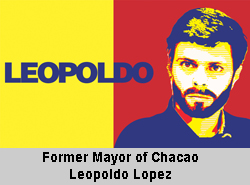
Livingstone said: "I believe that Caracas will become a first-world city in 20 years. I have a very extensive network of contacts both domestically and internationally which I will be calling on to assist in this," The Caracas municipal elections are the most prominent among the races Chavez' socialist party faces this November. Leopoldo Lopez, currently mayor of the Chacao municipality in the capital, was barred from standing as Mayor of Caracas on behalf of the social democratic New Era party this November by a government-dominated electoral tribunal, which cited 'administrative' charges of conspiracy to corruption against him.
The move has been interpreted as damaging to Livingstone's prospects of being selected as Labour's candidate for the 2012 mayoral elections, which he is eagerly seeking. A government minister and London MP, Gareth Thomas, recently lashed out at the suggestion of a 2012 Livingstone candidacy and urged the Labour Party to move on and find a "new generation" of candidates to take on Boris Johnson in four years time. Names touted in connection with the post include former MP Oona King, Skills Minister David Lammy and Human Rights Commission Chief Trevor Phillips. While all three are from the capital's black community, Lammy and Phillips both served on the London Assembly before entering government.
Mexico mayor apologises
for botched police action
Mexico City 24 July 2008: Mexico City Mayor Marcelo Ebrard apologised on behalf of his administration for the mistakes made during a raid on a discotheque, which left 12 young people dead. The mayor said he felt deep sorrow for the relatives and friends of the victims and also acknowledged that the police arrested many young people arbitrary. Ebrard promised a thorough investigation and said that legal action would be taken against anybody found to have acted unlawfully.
While Mexico City’s Human Rights Commission welcomed the mayor’s apology, it’s President Emilio Alvarez Icaza thought it should have been offered at a public event with all the relatives of the victims present. “Mayor Ebrard’s apology was not enough,” he added.
Meanwhile, the mayor has been requested to appear in from of the City Senate and explain the police action. A Senate spokesman pointed out the Human Rights Commission has questioned the full legality of the raid and recommended the suspension of Unipol - the police section that carried out the raid until it was issued with full and precise guidelines.
Mexico City mayor refuses
to resign over police raid
Mexico City, 13 July 2008: Pressure is mounting on Mexico City’s Mayor, Marcelo Ebrard to resign after a police raid on a discotheque, which left 12 people dead. The police action on 20 June, which has been described as heavy-handed, caused a stampede during which nine young people, three of them under-aged juveniles, and three police officer died. At the time of the raid, some 500 young people were celebrating the end of school term in an afternoon party.
The special section of the police, which carried out the raid, was set up in May as a permanent commission and tasked with preventing public order offences, illicit activities and to instigate crime prevention measures. The commission, Unipol, is headed Mayor Ebrard. According to reports, the police went to the discotheque to catch drug dealers and prevent the sale of alcohol to under-aged students. Eyewitnesses accused the police of having blocked doorways, which caused the people inside the club to panic as they tried to evade police officers.
Earlier this month in a special report, the President of the Human Rights Commission of Mexico City, Emilio Álvarez Icaza, accused the police of having treated the young people as criminals rather than victims of crime. “Their rights were severely violated and in spite of the deaths, they were marked with a number on their arm and taken in buses to police stations,” the report says. Emilio Álvarez Icaza also accused the authorities of having threatened an inspector of the Human Rights Commission and relatives of some of the victims.
Guillermo Zayas, Regional Director of the Public Security Department of the Federal District of Mexico city who led the raid, was at first suspended and is now held in custody and charged with murder. Mr. Zayas has claimed to have been made a scapegoat, to have been threatened, isolated and warned not to talk to the media.
Following pressure from the Human rights Commission, those immediately responsible for the police raid resigned. However, Mexico City’s mayor said in a TV interview that, while he accepted that serious errors were made during the raid, he would not resign because he had not personally ordered the action by the police. The mayor has now apologised for the raid. (Report by Adriana Maciel)
Most prominent Venezuelan
mayor barred from election
Caracas, 1 July 2008: Leopoldo López, mayor of the Caracas district of Chacao and a prominent critic of Venezuelan president Hugo Chavez, has been banned from contesting the forthcoming local elections by an electoral tribunal alongside 371 other candidates. López, a lawyer, has vowed to fight the ban, imposed by the Chavez-dominated national elections council on the grounds of untried charges of maladministration, on the basis that it violates the country's constitution. López is short-listed for the 2008 World Mayor Award.
The two-term district mayor, who currently enjoys high opinion poll ratings in the capital's mayoral race against his Chavez-backed United Socialist Party opponent, has pledged widespread protest: "None of us are legally disqualified. We will fight on the streets to make sure Venezuelans have the right to choose who they want." López even took his case to the US, where he addressed the recent US Conference of Mayors gathering and was able to put his case to Barack Obama, to the annoyance of the Venezuelan media. Opponents allege Chavez has borrowed tactics from ally Iran, who pulled off a similar move in recent elections to prevent reformist candidates from gaining office.
November's elections will prove crucial to Chavez' hopes of amending the constitution to allow him to stand for a third term of office. He recently accused the country's opposition of being "backed by North American imperialism, our true enemy" and of promoting Bolivian-style secessionism to "divide the country into pieces". Cuba's Prensa Latina press agency backed the disqualifications and accused the debarred candidates of having misused public funds, but denied their political rights had been abridged as they could still vote.
Nicaragua bars political parties
from running in local elections
Managua, 15 June 2008: Nicaragua's government has barred two political parties from running in this year’s municipal elections scheduled for 9 November. The country's electoral agency justified its decision by saying that the Sandinista Renovation Movement (MRS) had failed to meet a deadline for naming party representatives in all of the country's electoral districts.The party broke away from the ruling Sandinista Front in the 1990s.
The small Conservative Party (PC) was also barred on the same grounds. MRS leader Dora Maria Tellez, who is on a indefinite hunger strike to demand her party's return to the race, told reporters that the government move was politically motivated. “President Daniel Ortega is intend on eliminating political opposition.” Nicaragua has authorized 17 other parties to run on the November ballot. The two barred parties were expected to be contenders for many key mayoral posts.
Tellez’ protest has inspired hundreds of mostly young Nicaraguans to take to the streets in support of democracy and in protest of the Ortega government. Former Sandinista directorate leader and MRS head legislator, Víctor Hugo Tinoco, told the press that Téllez's protest has “removed the people's fear” of Ortega. He said that the struggle that was mounting on the streets is similar to the early stages of the uprising against the Somoza dictatorship in the 1970s. Though Tinoco said the MRS will exhaust all its legal channels, he said the fight will be won “in the streets.” (Report by Nicaragua Daily News and local reporters)
Mexican mayor killed
in front of his family Mexico City, 3 June 2008: A Mexican mayor was shot dead in what police believe was a drug-related killing. Marcelo Ibarra, Mayor of Villa Madero in Michoacan State, was murdered as he drove home with his family. The mayor’s wife and two children escaped unhurt. A spokesman for state attorney’s office said that drug gangs were probably behind the killing but armed robbery was not ruled out.
Witnesses told reporters that the vehicle of Mayor Marcelo Ibarra, of the opposition Revolutionary Institutional Party (PRI), was stopped by several people who shot at the man. He tried to escape the shots by hiding under the SUV, but he was injured and died on the way to hospital.
Brazilian parties discuss
local election coalitions
Belo Horizonte, 7 May 2008: Ahead of this autumn's Brazilian municipal races, tough negotiations lie ahead between the parties to determine their candidates ahead of the 2010 presidential elections which rely on similar horse-trading. The races of São Paulo and Belo Horizonte are likely to prove decisive in determining which parties align behind the frontrunners to succeed President Lula in 2010, while in Rio de Janeiro the two putative successors have clashed over same sex marriage and abortion.
Rio de Janeiro's mayor Cesar Maia is term limited and will stand down in November at the end of his third term. The two frontrunners to succeed the right-wing Democrat mayor are Green Party congressman Fernando Gabreia and former state gubernatorial candidate Senator Marcello Crivela of the clericalist Brazilian Republicans. Though both candidates' campaigns are yet to get off the ground, the two have clashed on a range of moral issues, including same sex marriage, abortion and legalising marijuana. The Rio race is not likely to feature strong campaigns by the otherwise dominant Workers' Party (PT) or Social Democrats (PSDB).
Former São Paulo mayor Marta Suplicy, defeated by Jose Serra in 2004, is most likely to contest the mayoralty on behalf of President Lula's PT. Her principal opponent would ordinarily be former state governor and 2006 presidential candidate Geraldo Alckmin of the PSDB but the race appears to be shaping up as a fight between the PSDB and incumbent Democrat mayor Gilberto Kassab, who was appointed following José Serra's elevation to the state governorship. The electoral coalition building process, on which victory depends in a highly fragmented party system, is complicated by likely alliances for the 2010 presidential elections.
In Belo Horizonte the spats between the PSDB and the Democrats at national level is also played out locally with a likely coalition emerging between PT mayor Fernando Pimentel and the PSDB, in exchange for the PT's support nationally for the presidential candidacy of Aécio Neves in 2010. While the PT nationally are content to back the PSDB, not least as no viable successor to Lula has emerged within its ranks and it claims to have no say in the municipal races this autumn, the São Paulo state party are angered by the deals made in its name that may resonate locally. (Reporting by Guy Burton in Brazil)
Brazilian police
arrest 16 mayors
Belo Horizonte, 11 April 2008: Brazilian police arrested more than 50 people and charged them with embezzling money from a government fund. Among those charged were 16 mayors, nine lawyers and a federal judge. Of the 16 mayors, 14 were from the state of Minas Gerais and two from Bahia. The arrests also included four municipal attorneys, four employees of the judiciary, the manager of a government bank and a lobbyist. According to investigations, which started eight months ago, the arrested embezzled at least 200 million reais (119 million US dollars) from the municipalities' share in the revenues from the income tax and the tax on industry products, both levied by the federal government.
Mexican mayor on drug
charges in New York City
New York City, 4 April 2008: Rubén Gil, newly elected mayor of the Mexican town of Izucar de Matamoros, Puebla appeared in a federal court in New York City after being arrested In Los Angeles. He is accused of being in charge of the supply of cocaine to dealers in New York City from 2005 to at least 2007. In November of last year Gil was elected mayor. He is also president of a haulage company with depots in Los Angeles and New York.
According to the US Drug Enforcement Agency (DEA), Gil, together with a co-defendant, participated in a far-reaching narcotics trafficking conspiracy, in which he arranged for the transportation and delivery of cocaine to co-conspirators in the New York metropolitan area. In November 2007, GIL arranged for the delivery of approximately 11 kilograms of cocaine to the New York metropolitan area. This followed a 22-kilogram cocaine delivery to the New York metropolitan area in June 2006.
Rubén Gil, also known as "Gavilan" or "Padrino," made his first court appearance on 3 April in New York City. If convicted, the mayor faces a maximum sentence of life in prison and a mandatory minimum sentence of 10 years in prison.
Meanwhile, the council of Izucar de Matamoros has appointed Rubén Gil's brother-in-law as interim mayor.
|
|

Mayor Monitor rates the performance of mayors from across the world More


US demands enquiry into Nicaragua local elections (Photo: Nicaragua's President Daniel Ortega
Chavez opponent wins in Caracas
Nicaragua’s Sandinistas claim local election victory
Mexico City to provide Viagra to elderly men
Chilean centre-right opposition makes gains in local elections
Incumbent mayor wins in Sao Paulo
Livingstone to advise Venezuelan mayors
Mexico mayor apologises for botched police action
Mexico City mayor refuses to resign over police raid
Most prominent Venezuelan mayor barred from election
Nicaragua bars political parties from running in local elections
Mexican mayor killed in front of his family
Brazilian parties discuss local election coalitions
Mexican mayor on drug charges in New York
|