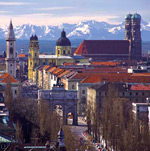
Munich has been named as Europe's 'best' property location in 2009, while...

FRONT PAGE
SiteSearch
About us
Mayor Monitor
Directories
Events
Debate

Real estate Europe 2009
Real estate USA 2009
Most powerful cities
European growth cities 2009
Europe's top city brands
Bi-national Öresund Region
ECA: Most expensive cities
EIU: Most expensive cities
Mercer: Most expensive cities
UBS: Most expensive cities
World's richest cities (GDP)
World's top cities
Richest cities (earnings)
World's best financial cities
European business cities
Best world cities to live in

City Mayors reports news from towns and cities around the world. Worldwide | Elections | North America | Latin America | Europe | Asia | Africa |

City Mayors ranks the world’s largest, best as well as richest cities and urban areas. It also ranks the cities in individual countries, and provides a list of the capital cities of some 200 sovereign countries. More

City Mayors profiles city leaders from around the world. More

City Mayors describes the history, architecture and politics of the greatest city halls in the world. More

Mayors from The Americas, Europe. Asia, Australia and Africa compete for the World Mayor Award. More

Use Mayor Monitor to rate the performance of mayors from across the world More

In your opinion: Praise Criticise. Write

City Mayors reports political events, analyses the issues and depicts the main players. More

City Mayors describes and explains the structures and workings of local government in Europe, The Americas, Asia, Australia and Africa. More

City Mayors deals with economic and investment issues affecting towns and cities. More

City Mayors describes and explains financial issues affecting local government. More

City Mayors reports urban environmental developments and examines the challenges faced by cities worldwide. More

City Mayors reports on and discusses urban development issues in developed and developing countries. More

City Mayors reports on developments in urban society and behaviour and reviews relevant research. More

City Mayors invites readers to write about the people in their cities. More

City Mayors examines city brands and marketing. More

City Mayors lists and features urban events, conferences and conventions aimed at urban decision makers and those with an interst in cities worldwide. More

City Mayors deals with urban transport issues in developed and developing countries and features the world’s greatest metro systems. More

City Mayors examines education issues and policies affecting children and adults in urban areas. More

City Mayors investigates health issues affecting urban areas with an emphasis on health in cities in developing countries. More

City Mayors reports on how business developments impact on cities and examines cooperation between cities and the private sector. More

City Mayors examines the contributions history and culture make to urban society and environment. More

City Mayors examines the importance of urban tourism to city economies. More

City Mayors questions those who govern the world’s cities and talks to men and women who contribute to urban society and environment. More

City Mayors profiles national and international organisations representing cities as well as those dealing with urban issues. More

City Mayors reports on major national and international sporting events and their impact on cities. More

City Mayors lists cities and city organisations, profiles individual mayors and provides information on hundreds of urban events. More
German cities offer best
prospects for real estate
A report by the Urban Land Institute
and PricewaterhouseCoopers
3 February 2009: With property values tumbling in the UK, Ireland and Spain as well as in many Eastern European countries, German cities emerge as the new favourites among European property investors. Real estate experts say that German cities are now the most promising and safest ones in Europe to invest in. A survey by the Urban Land Institute and PricewaterhouseCoopers (PwC) places four German cities among Europe’s top ten. Munich and Hamburg are awarded the top two spots, with Berlin and Frankfurt ranked nine and ten respectively.2011 update: Summary of latest findings
| THE MOST EXPENSIVE CITIES IN THE WORLD ECA International survey (June 2008): Introduction | Table: World | Table: Europe | Table: Asia | UBS survey (March 2008): Most expensive cities (Intro) | World's most expensive cities (table) | Richest cities by personal earnings (table) | Richest cities by purchasing power (table | Mercer survey (2007): Most expensive cities EIU survey (2007): Most expensive cities RICHEST CITIES BY GDP Introduction | 150 richest cities in 2005 | 150 richest cities in 2020 | Europe's richest cities | |
||
European investors, developers, bankers, and brokers ranked Munich top of the investment market league table due to a combination of factors including: an increase in government spending, which may lead to future economic growth; the decline in unemployment; a fast growing population and increased consumer spending power. Munich also came top of the European City Risk league table. Munich is seen as having low risk because of its diverse economic base, which mitigates risky investments. Indeed Germany is considered ‘less volatile with more long-term investors’ helping Hamburg to second place with Frankfurt and Berlin also ranking among the top ten for investment prospects in 2009.
However the authors of the survey Emerging Trends in Real Estate Europe, 2009 point out that the investment climate in all major European cities had fallen. “This is going to be a tough year for many investors. For those who bought at the top of the market it could be a struggle for survival, particularly if banks become more aggressive in dealing with covenant breaches. On the other hand for those with equity to invest, there will be opportunities as the banks start to take action. Although new debt will remain in very short supply, banks may have little alternative to remaining as lenders during the restructuring of defaulting borrowers,” said PwC real estate director John Forbes.
Investment and development prospects fell for all of the cities ranked in the report, with overall investment prospects dropping from a rating of 5.6 (modestly good) in 2008 to 4.7 (fair) in 2009. Developments prospects fell even further, from 5.6 to 4.3 (modestly poor). Risk ratings have also worsened.
ULI’s European president William Kistler pointed out that the full impact of the financial crisis was just starting to permeate the economy across Europe, as consumer spending, business confidence and property values continue to decline. “Everything is being put on hold until we start seeing signs of a bottoming out,” he said. However, despite the overall gloomy conditions, opportunities remain for those who have cash to invest, he noted. “With interest rates low, and the market generally not overdeveloped, there are bargains available for those who are in a position to buy.”
According to the report, Germany was seen as less volatile with more long-term investors. "The German real estate market is becoming more attractive in the crisis," Helmut Trappmann, head of real estate at PwC, told reporters in Frankfurt. "Acceptable returns make the risks considerably lower here then in the boom regions in earlier years."
Survey respondents ranked Istanbul third for investment prospects, falling from first place last year as investors continue to seek opportunities in the city. Istanbul secured the top place for development prospects although investors are still concerned with the risk Istanbul brings, viewing it as the eighth riskiest city in which to invest.
The retail sector has once again been awarded the top spot among property types for investment prospects, only just hanging on to the top spot with the hotel sector following closely behind. Economic development will determine just how rewarding these investments will be. Moscow is the most favoured investment spot amongst the major European cities and nearly half of all respondents regard it as a ‘buy’. Munich, Warsaw, Hamburg and Istanbul also earn marshal investor support. Markets with the highest sell rating include Dublin, Prague, Athens and Madrid and investors are urged to proceed with caution.