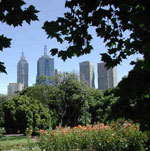
The Economist Intelligence Unit named Vancouver the 'best' city in the world

FRONT PAGE
SiteSearch
About us
Directories

EIU: Best cities in the world
Mercer: Best cities in the world
2007 C-40 climate summit
Cities' green policies
Secure cities
Cities' future
Most expensive world cities
Liveable cities
World's most polluted places

City Mayors reports news from towns and cities around the world. Worldwide | Elections | North America | Latin America | Europe | Asia | Africa | Events |

Mayors from The Americas, Europe. Asia, Australia and Africa are competing for the annual World Mayor Award. More

City Mayors ranks the world’s largest as well as richest cities and urban areas. It also ranks the cities in individual countries, and provides a list of the capital cities of some 200 sovereign countries. More

City Mayors reports political events, analyses the issues and depicts the main players. More

City Mayors describes and explains the structures and workings of local government in Europe, The Americas, Asia, Australia and Africa. More

City Mayors profiles city leaders from around the world and questions them about their achievements, policies and aims. More

City Mayors deals with economic and investment issues affecting towns and cities. More

City Mayors reports on how business developments impact on cities and examines cooperation between cities and the private sector. More

City Mayors describes and explains financial issues affecting local government. More

City Mayors lists and features urban events, conferences and conventions aimed at urban decision makers and those with an interst in cities worldwide. More

City Mayors reports urban environmental developments and examines the challenges faced by cities worldwide. More

City Mayors reports on and discusses urban development issues in developed and developing countries. More

City Mayors reports on developments in urban society and behaviour and reviews relevant research. More

City Mayors deals with urban transport issues in developed and developing countries and features the world’s greatest metro systems. More

City Mayors examines education issues and policies affecting children and adults in urban areas. More

City Mayors investigates health issues affecting urban areas with an emphasis on health in cities in developing countries. More

City Mayors examines the importance of urban tourism to city economies. More

City Mayors examines the contributions history and culture make to urban society and environment. More

City Mayors describes the history, architecture and politics of the greatest city halls in the world. More

City Mayors invites readers to write short stories about people in cities around the world. More

City Mayors questions those who govern the world’s cities and talks to men and women who contribute to urban society and environment. More

City Mayors profiles national and international organisations representing cities as well as those dealing with urban issues. More

City Mayors reports on major national and international sporting events and their impact on cities. More

City Mayors lists cities and city organisations, profiles individual mayors and provides information on hundreds of urban events. More
|
|
Vancouver, Melbourne and Vienna
named world’s most liveable cities
A report by the Economist Intelligence Unit
5 October 2005: Vancouver, Melbourne and Vienna are the world's ‘best’ cities to live and visit according to a new survey the London-based Economist Intelligence Unit (EIU). Vancouver, on the Canadian Pacific coast, is credited with low crime, good infrastructure and virtually no threats of terrorist attacks. Jon Copestake, editor of the EIU survey on liveability said that in the current global political climate, it was no surprise that the most desirable destinations were those with a lower perceived threat of terrorism.
April 2007: Table of the 50 best cities in the world.
West is best | Europe | North America | Latin America | Asia & Australia | Africa & Middle East |
The survey, published in October 2005, shows cities in Canada, Australia, Austria and Switzerland as the most ideal destinations thanks to a widespread availability of goods and services, low personal risk and an effective infrastructure.
The EIU’s Liveability Ranking, part of the Worldwide Cost of Living Survey, assesses living conditions in 127 cities around the world by looking at nearly 40 individual indicators grouped into five categories: stability; healthcare; culture and environment; education; and infrastructure. The survey gives a rating of zero per cent to 100 per cent and judges a city with a lower score to be the more attractive destination. A rating of 20 per cent is where real problems are seen to begin - anything over 50 per cent places severe restrictions on lifestyle.
West is best
• Sixty-three cities - almost half of those surveyed in total - fall into the top liveability bracket. This reflects the fact that many global business centres have a developed infrastructure and widespread availability. Still, the overwhelming majority of cities in the top liveability range are based in western Europe and North America.
• Only three cities in eastern Europe fall into this bracket along with 13 cities from Asia. All cities in North America and western Europe have ratings below 20 per cent. In contrast all cities in Latin America, Africa and the Middle East exceed this.
• The worst destinations in the survey are those of Algiers and Port Moresby in Papua New Guinea - where many aspects of daily life present challenges. All ten cities where the liveability index exceeds 50 per cent are in Asia, Africa or the Middle East.
Europe
Despite the clear difference in living standards between eastern and western Europe, the expansion of the EU and the strong economic development experienced in eastern Europe since the break-up of the Soviet Union is helping the east catching up with the west.
The three cities in eastern Europe with the best liveability indices (Budapest, Bratislava and Prague) are found in EU accession countries. Factors such as improved transport and communications infrastructure along with greater availability of goods, services and recreational activities have played a part in slowly bringing these cities into line with the west. Much less desirable are states beset by corruption and instability further to the east. Tashkent and Baku in the former Soviet republics of Uzbekistan and Azerbaijan score among the worst in the region with ratings of 42 per cent and 38 per cent respectively. Both countries are prone to corruption and civil unrest, with the threat of petty crime, terror and a lack of general amenities also playing a part. Istanbul, in EU accession-hopeful Turkey, has an unenviable liveability rating of 39 per cent - in part due to recent terror attacks including the 2003 attacks which specifically targeted expatriates.
Conversely, Austria's capital Vienna shares joint second spot with Geneva, Switzerland. Both cities have a rating of 2 per cent, with their climates, a factor beyond human control, as the main pitfall to living there. Athens, the least liveable destination in Western Europe, also suffers from climate issues, although its infrastructure also serves to bring its ranking down. Despite this Athens still occupies the top tier of the Economist Intelligence Unit's liveability scale.
North America
With low crime, little threat from instability or terrorism and a highly developed infrastructure, Canada has the most liveable destinations in the world. With a rating of just 1 per cent (as a result of a small threat from petty crime) Vancouver is the highest ranked city of all 127 surveyed. A further two Canadian cities (Montreal and Toronto) feature in the top five with ratings of just 3 per cent. All 4 cities surveyed score well in all respects.
Although higher crime rates and a greater threat of terror puts US cities below those of Canada, US cities are still among the world's most liveable. Cleveland and Pittsburgh are the joint best scoring cities in the United States (7 per cent), in joint 26th place in the global ranking. A lack of availability of recreational activities and certain infrastructural shortfalls put Lexington as the least liveable US city surveyed, in 56th place-although its rating of 13 per cent is still low.
Latin America
Although no Latin American city surveyed manages to present ideal living conditions, neither do any fall into the category where extreme difficulties are faced - although Bogota in Colombia (117th) comes close with a rating of 49 per cent. Bogota, like Caracas, Venezuela, has been subject to high profile levels of instability, unrest and violence. The two cities score 90 per cent and 75 per cent respectively in terms of stability due to widespread guerrilla warfare in Colombia and violent civil unrest in opposition to Venezuela's President, Hugo Chavez.
With scores of 20 per cent, Montevideo in Uruguay, Santiago in Chile and Buenos Aires in Argentina (joint 64th) offer the best living conditions in Latin America. This is largely thanks to relatively efficient infrastructure and the availability of goods and services. These are closely followed by US commonwealth territory San Juan in Puerto Rico (23 per cent), ranked 68th and Latin America's longest serving unbroken democracy, San Jose in Costa Rica (24 per cent) ranked 70th.
Asia and Australia
Alongside Canada, Australia is has some of the most liveable places in the world. Melbourne is ranked joint second overall with a rating of just 2 per cent. Perth, Adelaide and Sydney join Zurich, Toronto and Calgary in joint 5th place with ratings of 3 per cent. Just below this is Brisbane in joint 11th place. Elsewhere in the region cities in Japan, New Zealand, Hong Kong, South Korea, Singapore and Taiwan all offer a good standard of living, with a humid climate bringing scores down slightly.
Just North of Australia, however, a very different picture emerges, with Port Moresby, Papua New Guinea, returning the joint worst score of all 127 cities surveyed. With a rating of 66 per cent, Port Moresby suffers from high crime rates, corruption, instability, low availability of entertainment, goods or services and a dilapidated infrastructure. The proximity of Port Moresby to Australia highlights the two-tiered nature of liveability in Asian countries, with a number of well developed urban centres next door to countries where less favorable conditions apply.
The influx of investment in China alongside the increased availability of goods following WTO entry has helped all six Chinese cities surveyed perform relatively well, scoring between 24 per cent and 30 per cent. Alongside them are other emerging business centres such as Bangkok and Kuala Lumpur. Less developed cities, especially those where unrest or terrorism is an issue, fare much worse - with Phnom Penh (55 per cent), Karachi (60 per cent) and Dhaka (61 per cent) all falling into the worst liveability category.
Africa and the Middle East
Africa and the Middle East, where cities have an average rating of 40 per cent, fares worst of any region. Recent instability in the Middle East has made the threat of terror a key issue - although in Israel this is offset by a generally high level of development making Tel Aviv (23 per cent) the best destination surveyed in the region.
Strong anti-crime measures in many Arab states are also a stabilising factor, although a low crime rate can be outweighed by the many cultural restrictions in place. As a result, only Dubai (25 per cent) and Abu Dhabi (26 per cent) in the United Arab Emirates and Manama in Bahrain (27 per cent) have similar liveability ratings to Israel.
Cities perform much more poorly overall in Africa. The civil unrest and volatile nature of many countries, and the current political and economic climate mean cities such as Harare (53 per cent), Lagos (59 per cent), Abidjan (54 per cent) and Douala (53 per cent) prop up the ranking as some of the worst destinations. Alongside these are Tehran in Iran (52 per cent), where the threat of war has been enhanced by concerns over the country's nuclear programme. With a rating of 66 per cent Algiers, in Algeria, comes joint bottom of the liveability scale with Port Moresby. Although the threat of civil war has diminished slightly, the country has a ravaged infrastructure and has very little available by way of entertainment or goods and services to ease the cultural restrictions in place.
About the survey
The Economist Intelligence Unit's liveability ranking is an expansion on the methodology of previous "Hardship" surveys that have been published. In addition to the factors that were previously attributed to specifically causing hardship a number of other factors have been included to give a more rounded impression of how liveable a city is.
The survey takes over 40 factors into consideration, which are weighted across five different categories: Stability; Healthcare; Culture & Environment; Education; and Infrastructure. Across the survey a mixture of quantitative and qualitative data are used, which are combined to give an overall Quality of Life Index rating. Each indicator is given a rating of between one and five, where one means there is no impact and five means the factor is extremely challenging. These are then weighted to produce an index, where 0 per cent means the a city is exceptional and 100 per cent means it is intolerable.
View comments
|
|

Mayors from 50 cities compete for the World Mayor Award 2008. Vote now for the mayor you believe most deserves to win. Vote now

AFRICAN FINALISTS
• Winstanley Bankole Johnson, Freetown, Sierra Leone
• Helen Zille, Cape Town, South Africa
• Amos Masondo, Johannesburg, South Africa

NORTH AMERICAN FINALISTS
• Stephen Mandel, Edmonton, Canada
• Sam Katz, Winnipeg, Canada
• Martin Chavez, Albuquerque, USA
• Michael B Coleman, Columbus, USA
• Mufi Hannemann, Honolulu, USA
• Antonio Villaraigosa, Los Angeles, USA
• Willie W Herenton, Memphis, USA
• Manny Diaz, Miami, USA
• Raymond Thomas Rybak, Minneapolis, USA
• Phil Gordon, Phoenix, USA

LATIN AMERICAN FINALISTS
• José Fogaça, Porto Alegre, Brazil
• Sergio Fajardo Valderrama, Medellin, Colombia
• Juan Contino Aslán, Havana, Cuba
• Jaime Nebot, Guayaquil, Ecuador
• Paco Moncayo, Quito, Ecuador
• Salvador Gandara, Villa Nueva, Guatemala
• Antonio Astiazaran, Guaymas, Mexico
• Ernesto Gandara, Hermosillo, Mexico
• Ricardo Ehrlich, Montevideo, Uruguay
• Juan Barreto, Caracas, Venezuela
• Leopoldo Eduardo López, Chacao, Venezuela

ASIAN FINALISTS
• Han Zheng, Shanghai, China
• Zhang Guangning, Guangzhou, China
• C M Sheila Dikshit, Delhi, India
• Fauzi Bowo, Jakarta, Indonesia
• Mohammad Baqer Ghalibaf, Tehran, Iran
• Tadatoshi Akiba, Hiroshima, Japan
• Hiroshi Nakada, Yokohama, Japan
• Marides Fernando, Marikina City, Philippines
• Vladimir Gorodets, Novosibirsk, Russia
• Park Wan-soo, Changwon City, South Korea
• Kadir Topbas, Istanbul, Turkey

EUROPEAN FINALISTS
• Patrick Janssens, Antwerp, Belgium
• Boiko Borisov, Sofia, Bulgaria
• Eleni Mavrou, Nicosia, Cyprus
• Bertrand Delanoë, Paris, France
• Pierre Albertini, Rouen, France
• Jens Böhrnsen, Bremen, Germany
• Ulrich Maly, Nürnberg, Germany
• Wolfgang Schuster, Stuttgart, Germany
• Kyriakos Virvidakis, Chania, Greece
• Sergio Cofferati, Bologna, Italy
• Walter Veltroni, Rome, Italy
• Rafal Dutkiewicz, Wroclaw, Poland
• Rosa Aguilar, Cordoba, Spain
• Göran Johansson, Gothenburg, Sweden
• Elmar Ledergerber, Zurich, Switzerland

|